
The robotics industry stands at a pivotal moment. While many companies rush to develop humanoid robots aimed at replacing human workers, an innovative approach is emerging that promises to reshape our relationship with automation. At the forefront of this movement is PROXY, a company founded by former Amazon VP of robotics Brad Porter, which is pioneering collaborative robots – or cobots – designed to work alongside humans rather than replace them.
Having witnessed Amazon’s massive robotics operation – which currently deploys an astounding 700,000 robots for parcel handling and packaging – Porter’s vision for PROXY represents a fundamental shift in how we think about automation. This fresh perspective challenges the narrative that robots will inevitably replace human workers.
The Power of Human-Robot Collaboration
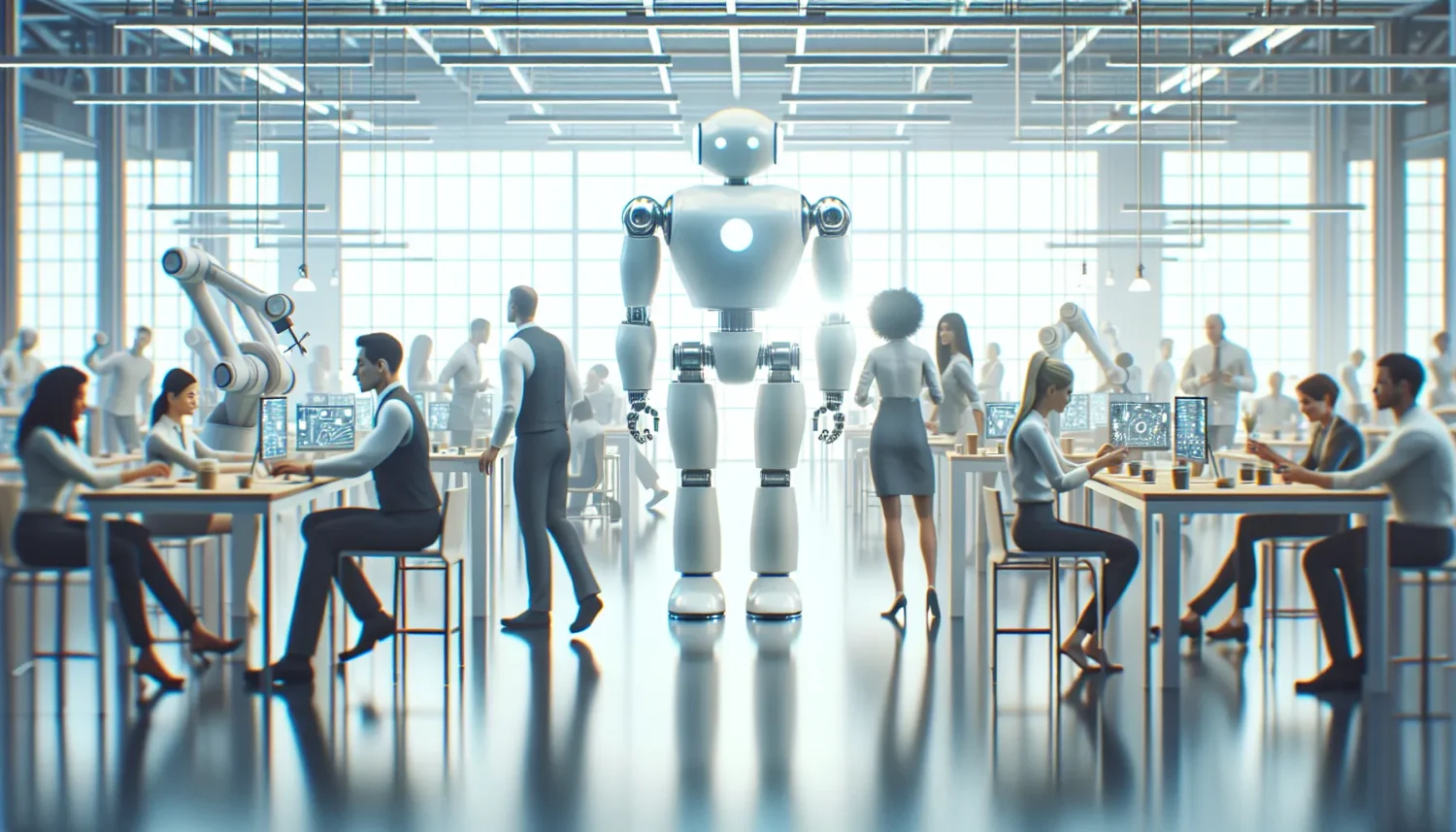
Working in manufacturing and industrial settings has traditionally meant keeping humans and robots separated by safety cages and designated zones. This separation creates inefficiencies and limits the potential of both human workers and automated systems. PROXY’s cobot, MOXI, breaks down these barriers by operating safely alongside humans, creating a more dynamic and efficient workplace.
We’re designing these robots to help us, not replace us, in every sector. MOXI moves and swerves naturally in sync with the people working around it.
The impact on worker satisfaction has been remarkable. Factory employees report feeling more fulfilled in their roles when working with cobots, as the robots handle repetitive physical tasks while allowing humans to focus on problem-solving and communication – skills that make us uniquely human.
Advanced Technologies Driving Cobot Intelligence
What sets PROXY’s cobots apart is their sophisticated integration of multiple technologies:
- Lidar-based perception creates real-time 3D mapping of environments
- Visual object recognition enables immediate identification of workplace items
- Autonomous obstacle avoidance allows smooth navigation in dynamic spaces
- Vision language models facilitate natural communication with human operators
- Visual SLAM technology provides precise positioning and environmental awareness
These systems work in concert to create a robot that can truly understand and adapt to its environment. The implementation of bimanual manipulation – the ability to use two arms in coordination – mirrors human movements and enables complex task execution.
Real-World Applications and Impact
The practical applications of these cobots extend far beyond simple automation. They’re designed to be versatile, handling multiple use cases within the same facility. From picking items off shelves to assisting with complex assembly tasks, these robots adapt to different scenarios while maintaining safe and effective collaboration with human workers.
Early feedback from implementation sites shows a significant positive impact on worker well-being. Workers report leaving their shifts feeling less physically exhausted and more satisfied with their work. This outcome demonstrates that the future of automation isn’t about replacing humans – it’s about enhancing human capabilities and improving workplace conditions.
Looking Ahead: The Evolution of Human-Robot Teamwork
As AI and hardware continue to evolve, so will the capabilities of these collaborative robots. The focus remains on developing systems that can generalize their learning, adapting to new tasks without extensive reprogramming. This adaptability ensures that cobots will become increasingly valuable partners in various industries.
The success of PROXY’s approach suggests that the future of work lies not in complete automation, but in finding the sweet spot where human creativity and robot efficiency meet. This collaboration model could revolutionize industries while preserving and enhancing the role of human workers.
Frequently Asked Questions
Q: How do cobots differ from traditional industrial robots?
Cobots are specifically designed to work safely alongside humans without requiring safety cages or designated zones. They incorporate advanced sensing and safety features that allow them to operate in shared spaces, unlike traditional industrial robots that must be separated from human workers.
Q: What safety measures are in place to protect workers around cobots?
Cobots use multiple safety systems including lidar perception, visual recognition, and autonomous obstacle avoidance to detect and respond to human presence. They’re programmed to move safely around people and adjust their operations based on real-time environmental awareness.
Q: Can cobots adapt to different types of work environments?
Yes, cobots are designed with versatility in mind. They use advanced SLAM technology and AI systems to map and understand various environments, allowing them to function effectively in warehouses, factories, offices, and other workplace settings.
Q: What impact do cobots have on worker satisfaction?
Workers report higher job satisfaction when working with cobots, as the robots handle physically demanding tasks while allowing humans to focus on more engaging aspects of their work. This results in less physical exhaustion and more fulfilling workdays.
Q: How will cobots evolve in the future?
Future cobots will likely feature enhanced AI capabilities, improved bimanual manipulation, and better ability to generalize learning across different tasks. The focus will remain on developing robots that complement human workers rather than replace them.